
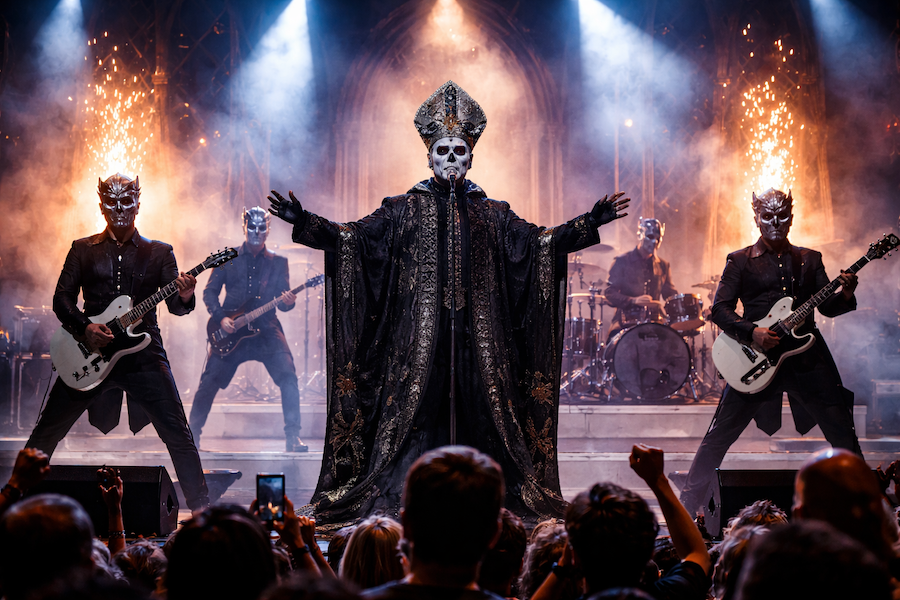
Few modern rock bands have managed to create a world as distinctive and immersive as Ghost. Blending theatrical imagery, melodic songwriting, and heavy riffs, the band has carved out a unique place in contemporary rock and metal culture. Ghost is not only a musical act but a carefully constructed universe where satire, mysticism, and classic rock traditions coexist.
This article explores Ghost as a phenomenon, examining their sound, visual identity, themes, and lasting influence on modern heavy music.
A band built on mystery
From the beginning, Ghost positioned itself differently from most rock bands.
Key elements of their mystique include:
- anonymous band members
- masked musicians
- a rotating front figure with a ceremonial persona
- minimal early media exposure
This secrecy shifted attention away from individuals and toward the music and atmosphere.
The importance of anonymity
Anonymity allowed Ghost to:
- avoid celebrity-driven narratives
- focus on concept and storytelling
- create a timeless, almost mythological presence
Rather than knowing the band members, audiences were invited to engage with the ritual.
The visual identity of Ghost
Ghost’s imagery is as central as the music itself.
Costumes and symbolism
The band’s aesthetic draws from:
- religious iconography
- gothic horror
- classic heavy metal theatrics
Robed musicians, skeletal masks, and ceremonial attire give Ghost a striking stage presence that feels closer to theater than a traditional rock concert.
Satire beneath the surface
While the imagery may appear dark or ominous, it often carries a layer of irony.
Ghost uses symbolism to:
- parody authoritarian structures
- critique blind devotion
- explore power and control through exaggeration
This balance between seriousness and satire is key to the band’s appeal.
Musical style and influences
Despite their visual heaviness, Ghost’s music is remarkably accessible.
Melody-driven songwriting
At the core of Ghost’s sound is:
- strong vocal hooks
- clear song structures
- memorable choruses
Their music often feels closer to classic rock than extreme metal.
Roots in classic heavy music
Ghost draws inspiration from:
- 1970s and 1980s hard rock
- traditional heavy metal
- arena rock and pop sensibilities
This creates a sound that feels familiar yet refreshed for modern audiences.
Balancing darkness and accessibility
One of Ghost’s defining traits is contrast.
The band combines:
- dark lyrical themes
- upbeat melodies
- polished production
This duality allows Ghost to reach listeners beyond traditional metal circles.
Themes explored in Ghost’s music
Ghost’s lyrics often explore ideas rather than personal narratives.
Power, belief, and authority
Recurring themes include:
- organized belief systems
- manipulation of faith
- the psychology of obedience
These topics are presented through metaphor rather than direct commentary.
Mortality and legacy
Many songs reflect on:
- death and impermanence
- the desire for meaning
- what remains after power fades
This philosophical layer gives the music depth beyond surface-level shock value.
Evolution over time
Ghost has never remained static.
Shifting musical direction
Over the years, the band has:
- expanded into more polished, arena-friendly sounds
- incorporated pop and synth elements
- experimented with brighter production
Each era feels distinct while maintaining a recognizable identity.
Changing personas and eras
The rotating front figure reinforces the idea of chapters.
Each new era:
- introduces a new character
- brings a slightly altered tone
- refreshes the band’s mythology
This keeps the project dynamic and forward-looking.
Live performances as ritual
Seeing Ghost live is a central part of the experience.
Concerts as theatrical events
Ghost concerts are designed as:
- choreographed performances
- immersive visual experiences
- communal rituals
Lighting, costumes, and staging are carefully planned to enhance atmosphere.
Audience participation
Fans are encouraged to:
- sing along
- engage with recurring rituals
- feel part of a shared experience
The barrier between band and audience is intentionally blurred.
Ghost’s place in modern rock
Ghost occupies a unique position in today’s music landscape.
Crossing genre boundaries
The band appeals to:
- metal fans
- classic rock listeners
- alternative and mainstream audiences
This crossover success is rare in heavy music.
Commercial success without compromise
Ghost has achieved:
- global tours
- mainstream chart presence
- critical recognition
All while maintaining a strong conceptual identity.
Sweden’s influence on heavy music
Ghost is part of a broader tradition of innovative heavy music emerging from Sweden.
For listeners interested in how Swedish bands have reshaped heavy music across genres, Meshuggah – The Swedish Metal Band That Redefined Heavy Music offers insight into another influential approach that contrasts sharply with Ghost’s melodic theatricality.
Criticism and controversy
As with any provocative act, Ghost has faced criticism.
Misinterpretation of imagery
Some critics focus solely on:
- surface-level symbolism
- shock value
This often overlooks the band’s use of irony and commentary.
Debate within metal communities
Traditionalists sometimes question:
- the band’s musical heaviness
- their mainstream appeal
Yet these debates highlight Ghost’s boundary-pushing nature.
Why Ghost resonates today
Ghost’s success reflects broader cultural trends.
A desire for storytelling
In an era of fragmented media, Ghost offers:
- cohesive narratives
- immersive worlds
- long-term artistic vision
This depth attracts dedicated followers.
Escapism with meaning
The band provides:
- theatrical escape
- intellectual subtext
- emotional connection
It is entertainment that invites reflection.
The future of Ghost
Ghost shows no signs of slowing down.
Likely future directions include:
- further musical exploration
- expanded visual storytelling
- continued reinvention
The project thrives on evolution rather than repetition.
Enduring appeal
Ghost’s strength lies in balance:
- mystery without alienation
- heaviness without excess
- spectacle grounded in strong songwriting
This combination ensures longevity.
Summary
Ghost stands as one of modern rock’s most distinctive acts, blending theatrical presentation with melodic, accessible songwriting. By embracing anonymity, satire, and carefully crafted symbolism, the band has created a world that feels both timeless and contemporary. Their music bridges the gap between classic rock tradition and modern heavy music, while their live performances transform concerts into communal rituals. As the phantoms of rock, Ghost continues to haunt the global music scene with creativity, reinvention, and unmistakable identity.